
Pyramid Weights are one of those small, satisfying projects that you’ll find yourself using every day. They’re quick to sew, perfect for scraps, and incredibly versatile — whether you use them as pattern weights in your sewing room, book weights on your bedside table, or scented sachets tucked into your drawers.
This updated tutorial includes step‑by‑step photos to guide you through the construction, plus a link to download the free Pyramid Weight pattern so you can start sewing your own.
You can download the printable template and instructions here: 👉 Click to get the free pattern
Check out our post: Why you’ll want to sew Pyramid Weights for more photos and inspiration.
These little Pyramid Weights can be used to keep your book open or to hold your pattern pieces in place. Alternatively, fill with dried lavender and use them as a scented sachet in your wardrobe or linen drawer to keep everything smelling fresh.
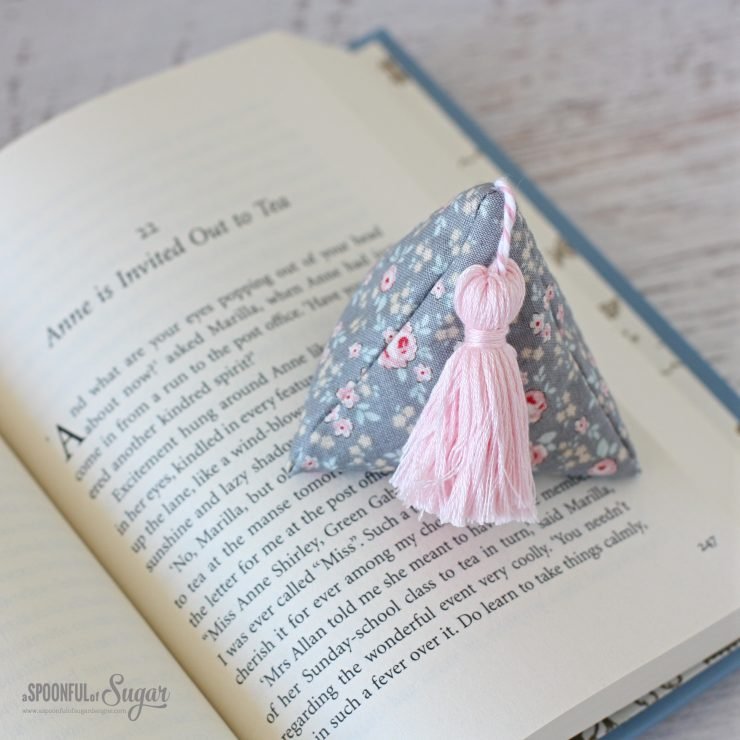
To make your own Pyramid Weights, you will need:
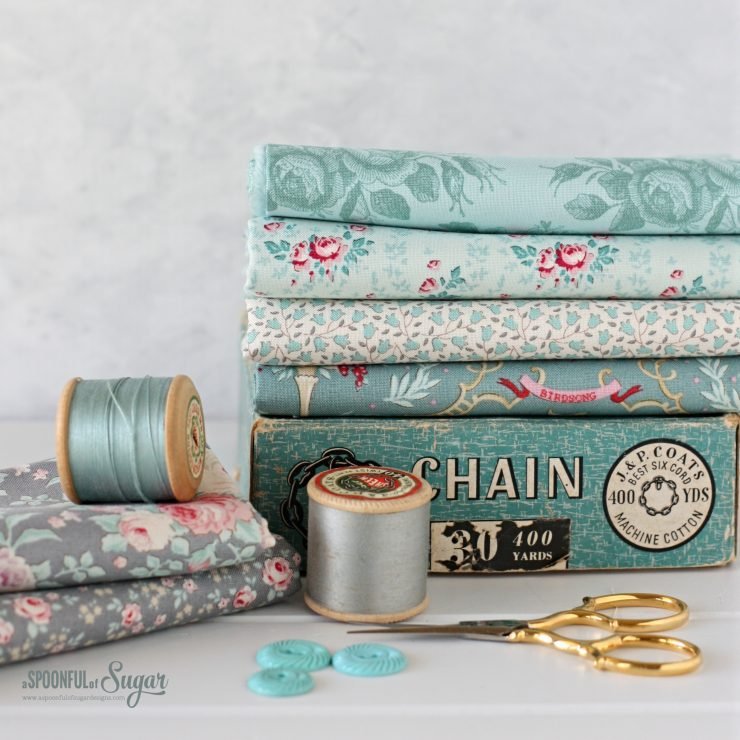
- cotton quilting fabric (I used pretty florals from Tilda Old Rose Collection)
- small tassel (or make your own using a skein of embroidery thread and the Clover Tassel Maker)
- dried (uncooked) rice to fill the weight or toy stuffing pellets (alternatively use dried lavender)

From your fabric, cut an equilateral triangle with equal sides measuring 7 inches (all angles will be 60 degrees). These are easy to cut using the 60 degree angle on your quilting ruler.
I made my own tassels using the Clover Tassel Maker and coordinating Cosmo embroidery thread.

With the right sides of the triangle facing, fold in half (bringing two of the corners together) and stitch in place using a 1/4 inch seam.

Bring another corner of the triangle up to meet the other sewn corners. Pin edges together and stitch in place. You will now have two sides of the pyramid sewn, leaving the third side open.

Position the tassel on the inside of the pyramid as shown in the image below. The hanging loop of the tassel will come out the top next to the sewn corners. Pin the remaining side of the pyramid and sew the seam, leaving a 1.5 inch gap for turning.

Turn the pyramid out the right way through the gap in the seam. Fill the pyramid with rice or other weighted stuffing. You can use a funnel or roll up a piece of paper to form a funnel to make it easier to fill. Hand stitch the gap in the seam closed.
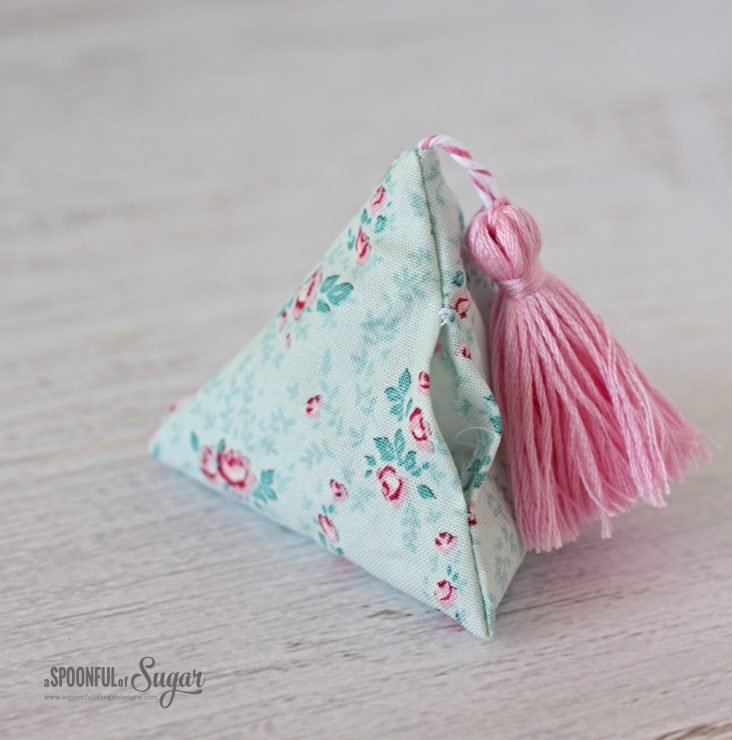
Pyramid Weights are an easy sewing project and makes sweet little gifts. This is a beginner friendly project and they can be easily made in under 30 minutes. It is hard to stop at one! With Christmas coming, they would make lovely little stocking stuffers.
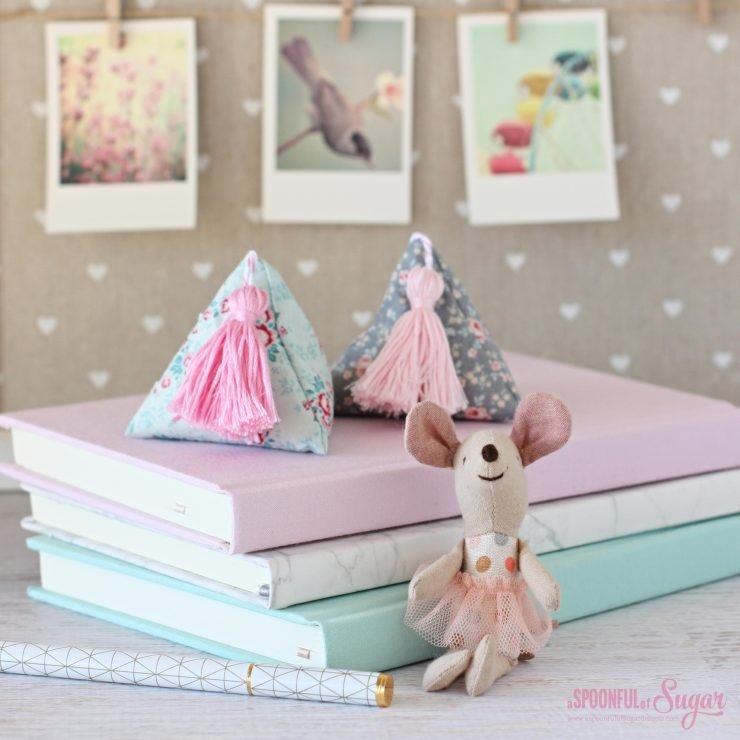

II hope you enjoy sewing these sweet little Pyramid Weights as much as I do. They’re a wonderful scrap‑buster, a thoughtful handmade gift, and a practical addition to your sewing space or home. Don’t forget to download the free pattern above, and if you make a set, I’d love to see your creations — tag me on Instagram so I can admire your beautiful fabric choices. Read more here: Why You’ll Want to Sew these Pyramid Weights
Download the free pattern here.
Disclaimer: Thanks to Two Green Zebras for providing the Tilda Old Rose Fabric that is used in this project.




Thank you for your email. Wonderful projects and material. I am definitely going to have a go at some of them.
Thanks Janet
I happened across your site looking for a method of sewing a DIY activated charcoal air freshener, using activated charcoal for fish tanks. I stole the idea from another website, but she didn’t give any instructions for making them beyond that. I’ll have to play around with the size once I figure out exactly how much charcoal I’ll need for each room, but this pattern looks promising. Bookmarked.
I came across your site while searching for sewing patterns that I would be able to sew and sell. I want to make sure that is the case. Can I sell the weights online (or at craft shows)?
Hi Kathleen – You are most welcome to sew and sell any items you make from my patterns. I would appreciate if you included inteh advertising that they were made using one of my patterns/tutorials.